What is Small-Bay Industrial?
Small bay industrial is multi-tenant flex space with units typically 500–10,000 SF for contractors, distributors, and service businesses.
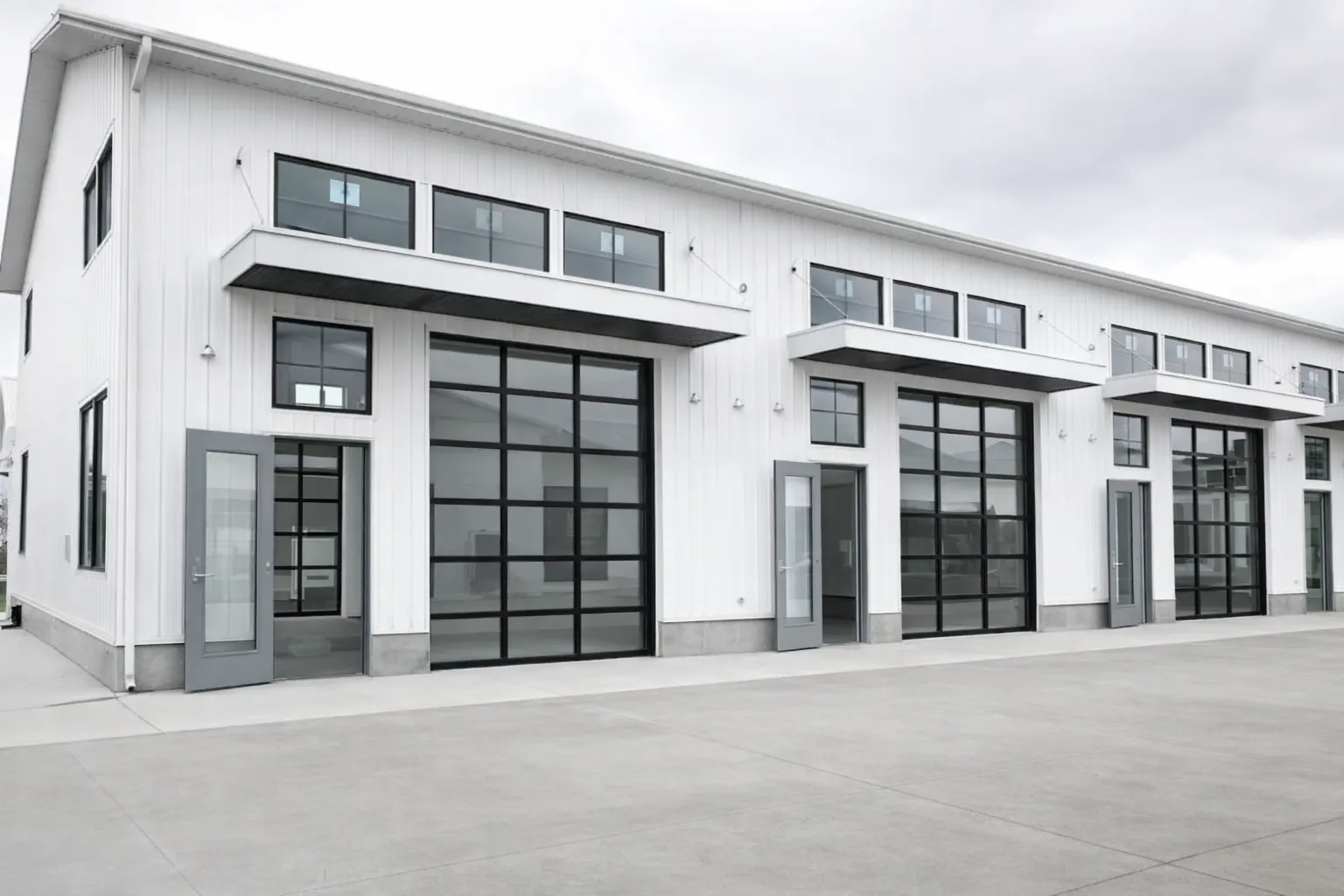
TL;DR: Small-bay industrial properties feature multiple compact units (typically 500-10,000 SF) within a single building, combining warehouse and office space. They're ideal for contractors, distributors, and service businesses. Vacancy rates are historically low (under 5%), and rent growth has outpaced big-box industrial by 40%+ since 2020.
What Defines Small-Bay Industrial?
Small-bay industrial is a commercial real estate asset class characterized by multi-tenant buildings with compact, flexible units. Unlike traditional big-box warehouses serving single large occupiers, small-bay properties divide space among 20–100+ tenants, each occupying units typically ranging from 500 to 10,000 square feet.
These properties are sometimes called "contractor bays" or "service bays" because of their popularity with trade contractors and local service businesses. See our complete list of 17 names for this asset class.
Key Characteristics
Small-bay industrial properties share several defining features:
- Unit sizes: Typically 500 to 10,000 SF per tenant
- Building size: 2,000 to 100,000 SF total
- Ceiling heights: 12 to 24 feet clear height
- Loading: Grade-level or dock-high doors
- Outdoor needs: Shared or exclusive yard space for vans, trailers, and staging
- Subdivision: Demising walls along bay lines set the unit mix
- Fire protection: Often sprinklered space, which affects storage height and use
- Office component: 10% of each unit
- Multi-tenant: 1 to 100+ tenants per property (multi-tenant industrial)
- Lease terms: Typically 1 to 3 years
Who Uses Small-Bay Industrial Space?
Small-bay industrial attracts a diverse tenant base across multiple industries:
Trade Contractors
- HVAC and plumbing companies
- Electrical contractors
- Roofing and siding installers
- General contractors and builders
Distribution & Logistics
- Last-mile delivery operators
- E-commerce fulfillment
- Local distributors
- Regional sales offices with inventory
Service Businesses
- Auto repair and detailing
- Equipment rental companies
- Cleaning and restoration services
- Landscaping operations
Light Manufacturing
- Custom fabricators
- Food production
- Assembly operations
- Specialty manufacturers
Why Investors Love Small-Bay
Small-bay industrial has become one of the hottest asset classes in commercial real estate. Here's why:
- Diversified income: Multiple tenants reduce single-vacancy risk
- Short lease cycles: 1-3 year terms allow frequent rent adjustments
- Higher rent PSF: Commands premium rents vs. big-box ($12-25/SF vs $6-10/SF)
- Limited supply: Zoning restrictions and land costs limit new development
- Recession resilience: Essential service tenants maintain occupancy
- Strong fundamentals: Vacancy under 5% in most markets
Small-Bay vs. Big-Box Industrial
Factor | Small-Bay | Big-Box |
|---|---|---|
Unit Size | 500–10,000 SF | 50,000+ SF |
Tenants | 10–100+ per property | 1–3 per building |
Lease Term | 1–3 years | 5–10+ years |
Rent/SF | $12–25 | $6–10 |
Vacancy Risk | Diversified | Concentrated |
Tenant Type | Local/regional | National/global |
Market Dynamics
The small-bay industrial market has significantly outperformed broader industrial:
- Vacancy rates: As low as 4.2% vs 7.4% for larger spaces
- Rent growth: 40%+ increases since 2020 in key markets
- Tenant demand: Strong competition for limited available space
- New supply: Minimal due to construction economics
Key Markets for Small-Bay Industrial
Small-bay industrial thrives in markets with:
- Strong population growth
- Diverse local economies
- Limited land for new development
- High concentration of trade businesses
- E-commerce fulfillment demand
Top markets include South Florida, Phoenix, Dallas-Fort Worth, Atlanta, and the Carolinas.
The Bottom Line
Small-bay industrial is a multi-tenant industrial format built around compact units, short leases, and a local tenant base. Diversified income, frequent rent resets, and limited new supply are the usual reasons owners and investors underwrite it. Results still vary by market, vintage, and lease structure.
For tenants, the format offers right-sized warehouse-office space close to customers, often with grade-level access and enough yard space to run a trade or light distribution operation.
Rent and income math show up in the lease calculator and NOI calculator. For definitions of the operating math, see What is NOI?.